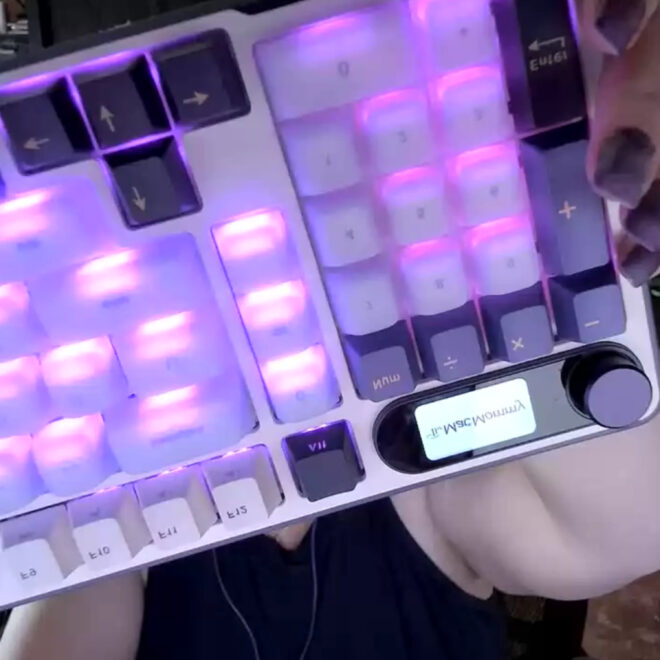
Brett records an episode without Christina and Jeff and chats with Melissa Davis (The Mac Mommy) about her start as a mommy blogger and longtime Mac podcaster, her tech-support work, and the strange lack of closure when online friends disappear. They trade mental-health and chronic-illness updates, Adderall vs. Vyvanse, difficulty finding curious doctors, and being labeled “worried well.” Don’t worry, they nerd out on mechanical keyboards, Karabiner, and remapping keys. GrAPPtitudes include Bartender 6 Pro, Sortio for AI tagging, Sketch Party TV, and Karabiner.
Sponsor
OneSkin improves your skincare routine with science-backed skin care products. With over 10,000 five-star reviews and validation from clinical studies, OneSkin has made a name for itself in the skincare industry.
If you’re interested in trying OneSkin for yourself, you can get 15% off your order with the code OVERTIRED at oneskin.co/OVERTIRED.
Chapters
- 00:00 Meet Melissa Davis
- 00:56 Early Podcast Days
- 02:20 Tech Support Seniors
- 05:52 Digital Legacy Work
- 06:50 Sponsor: OneSkin
- 08:14 Mental Health Check In
- 08:34 Insomnia And Focus
- 13:19 Doing Time Tracker
- 16:04 Suspenders And Stenosis
- 20:18 Mobility And Home Hacks
- 22:10 Melissa Health Update
- 23:25 ADHD Meds And Mutations
- 25:25 Curious Doctors Matter
- 27:59 Vyvanse Vs Adderall
- 30:26 Tracking Mood With Data
- 32:27 Cane And Somatic Therapy
- 36:09 Somatics For EDS
- 36:50 Yoga Modifications
- 38:19 Polycystic Liver Shock
- 39:20 Fatphobia In Healthcare
- 40:56 Pole Dancing Reality Check
- 41:55 Mechanical Keyboard ASMR
- 45:56 Nail Art And Picking
- 49:09 Keyboard Layout Rabbit Hole
- 01:00:59 Shortcuts And Muscle Memory
- 01:03:12 GrAPPtitude App Picks
- 01:14:07 Karabiner Power Tips
- 01:17:30 Wrap Up And Thanks
Show Links
- hEDS
- Doing
- Timing
- Royal Kludge Keyboard
- Gamakey Silent Linear Switches
- EPOMAKER Switch Benefit Section
- EPOMAKER AegisSil Keycaps Set
- SketchParty TV
- Karabiner
- Sortio
- Bartender Pro
- Day One
Join the Conversation
Thanks!
You’re downloading today’s show from CacheFly’s network
BackBeat Media Podcast Network
Check out more episodes at overtiredpod.com and subscribe on Apple Podcasts, Spotify, or your favorite podcast app. Find Brett as @ttscoff, Christina as @film_girl, Jeff as @jsguntzel, and follow Overtired at @ovrtrd on Twitter.
Podcast: Play in new window | Download
Subscribe Apple Podcasts | Spotify | iHeartRadio | RSS | More
Transcript
Nails and Keys with Melissa Davis (The Mac Mommy)
[00:00:00]
Meet Melissa Davis
Brett: Hey, this is Brett Terpstra. I am without my usual cohorts, Christina and Jeff. Um, so I, I wanted to, you know, get a, get an episode out for all of you listeners, and I reached out to Melissa Davis, known as The Mac Mommy. Um, I don’t, I, I don’t know if they’re still known as The Mac Mommy, but in m- in my lifetime they have been.
Um, Melissa, why don’t you introduce yourself, let people know, like, M-Ma- long time, like Mac personality, podcaster. Tell us where you came from.
Melissa: Where did I come from? Outer space. Uh, I came from being a mom. I, I, I will admit, this is
hard to admit, But I will admit I started out as a mommy
blogger. That’s, like, kind of
a bad word nowadays.
Brett: back, back, yeah, this is way Back when
Melissa: [00:01:00] Yeah.
Early Podcast Days
Melissa: so we’re talking, like… Well, my oldest is gonna be 20, Brett. My oldest is gonna be 20 this summer.
End of, end of June he’ll be 20 years old. So that’s about how long I’ve been doing podcasting. I mean, I started, I started,
like, when… Well, you know what? I started
listening to Adam Christianson’s The
MacCast
Brett: But you know what? I started Sure. Like one of the very first
podcasts, Yeah.
Melissa: still, I still listen to him on the Mac Geek Gab. Like, his voice is just so soothing to me.
I used to… Like, that was the f- Back when I had, I had, I remember I had, like, an old G4, uh, Quicksilver Mac, and in the stinky little back room of our old house. And I used to, I used to download the podcasts, burn them on a CD, put them in my Walkman, 'cause I didn’t have an iPod yet at the time. I wasn’t that…
I was never really that cutting edge. And I’d burn them on a CD, I’d put the CD in my Walkman, and then I would sit and nurse, I would nurse my baby. I, [00:02:00] and I would have to tuck the, uh, the headphones, you know, I’d have the ear- the, the wired, kinda like I have now, uh, and tuck it behind my back, like, behind my shoulder, because otherwise he’d, like, yank on the cord.
And I would just listen to podcasts while I nursed. And I… And then, uh, then I met Victor Cajiao, and I started just kind of being, like, a serial podcaster, showing up here and there, and then it just kinda grew from there.
Tech Support Seniors
Melissa: Um, and I do… So I do tech support. I’m an IT tech s- tech support person. I… People call me their computer guru.
I mostly work with, uh, the senior population, our,
our vintage people, which I, I’m slowly
becoming one of them.
We’re all, we’re all gonna go
that way.
Brett: I feel like anyone who does Mac tech support deals with probably an, a, a population that skews older.
Melissa: Mm-hmm. Mm-hmm. Yeah, it’s actually, it’s actually more– I will say it’s actually more difficult to work with somebody younger. Like, especially people my age or people [00:03:00] that are like, say, in their sixties I consider pretty young, 70 even. Uh, yeah, so but it’s, you know, the people are so, so interesting. You can learn so much.
I love working with this population because they’re like encyclopedias, and the stories they tell you and the things you learn, it’s pretty amazing. And I could just, I could just spend– I have actually spent all day with some of them. Some of us just have really great chemistry and, you know, it’s… They– I, I’m also– I have ADHD, that’s no secret.
And I think when you get older, um, not– it doesn’t affect everybody, but I do see a lot of what could be either they, they have ADHD or it’s like a–
Brett: they have
Melissa: of creeps in and it’s just a natural process
of aging,
cognitive decline.
So, yep.
Brett: have a lot of patience. Sure. S- some of my, some of my most interesting relationships over the last 10 years have been with, uh, Mac users in their late 70s, [00:04:00] 80s.
And, uh, like they’ve been– They’re very– Like, they’re definitely… The people that I’ve known have been technically capable and very interested in learning. That’s why they follow me. That’s how I meet them, right? They’re like, they read my blog, which is just all nerd stuff. And, and so they’re, they’re technically competent, and they’re doing things that I can only aspire to be doing in my 70s and 80s.
Um, I had a guy who was writing his memoirs at, in between like mountain bike rides. And so here’s the thing, though, is when you, when you know someone online and they’re in their 80s and you stop hearing from them for a
Melissa: Yes. Yes.
Brett: you have to assume that they have passed on. and that is sad, and you never really get any closure because you don’t know their friends or family.
You [00:05:00] never get like a notice, an obituary. You don’t, you don’t know where these people go, um, and you don’t know how to check in on them once your normal channels of communication are severed.
Melissa: Yeah,
we’re at that age where we probably
start reading the obituaries. Like, I haven’t heard from so-and-so in a while. Let me
check the
obits."
Brett: I had, I had– Before NVUltra went on for, what’s it, like five years now, uh, without a release, um, I had a project called BitWriter with David Halter. And
Melissa: remember you mentioning that, yeah. Yeah, and
you wondered. Mm-hmm.
Brett: he stopped responding.
Melissa: you find out any at all?
Any, Any,
concrete…
Brett: Nothing. I have put feelers out everywhere I can
think of. I have no idea what happened to
him.
Melissa: went Richard Simmons,
huh?
Brett: yeah. Yeah. With less
Melissa: No contact. No contact. Aw.
Digital Legacy Work
Melissa: I, I’m lucky that, uh, in my line of [00:06:00] work, I do typically
hear from the family if they’ve
passed on, because I form kind of a
bond with a
lot of people. I, I typically don’t lose clients
unless they die, so…
Brett: and you have some, like, in
real life connections to
Melissa: Oh, yeah. Yeah, I do, I do both. I do… I have some clients where I’ve never met them in person, I’ve only ever done remote. Uh, and then, but most of my clients are, are local, the majority of them. But I, I still s- see them remotely too, so yeah. I’ve, I’ve actually been hired by some people, um, mostly I’ve had two male clients who they got a terminal illness, they knew they were terminal, and they followed me online and they pretty much hired me to take care of their surviving spouse.
So that, that was… that’s a difficult thing, but I’m just honored that they chose me to, to help them out with that. So I’ve kind of been a bit of a digital undertaker in that regard.
Sponsor: OneSkin
Christina: I want to take a moment to share something that has significantly improved my skincare routine, OneSkin. [00:07:00] So we all have those days when our skin doesn’t feel its best, and I’ve certainly been in that boat, especially recovering from surgery.
And I was tired of navigating through endless products that promised results, but often fell short. And that’s when I discovered OneSkin. It was founded by scientists dedicated to longevity, and this brand stands out for its commitment to real science over marketing hype. They tackle the fundamental question of how to actually slow down skin aging rather than just masking it.
And their groundbreaking ingredient is, uh, ZeroS01, and it’s a proprietary peptide designed to help deactivate the damaged cells that contribute to aging skin. Since incorporating OneSkin into my routine, I’ve actually been noticing some improvements. My skin feels smoother. It looks more vibrant. Um, it’s definitely more moisturized, and so this is benefiting from its focus on supporting collagen and strengthening the skin barrier.
With over 10,000 five-star reviews and validation from clinical studies, OneSkin has made a name for itself in the skincare industry. If [00:08:00] you’re interested in trying OneSkin for yourself, you can get 15% off your order with the code OVERTIRED at oneskin.co/overtired.
That’s 15% off at oneskin.co/overtired using the code OVERTIRED. Thank you for supporting our show by checking them out
Mental Health Check In
Brett: Um, so do you wanna do a mental health
Melissa: Sure.
Brett: I, I know, I know you’ve listened to the show before. I know you know how this works.
Melissa: how
this works.
Brett: Would you like to start?
Melissa: I think I would like to hear you
start, and then I’ll, I’ll
add on
Brett: that sounds good.
Insomnia And Focus
Brett: Um, so sleep continues to be a major issue for me. Um, I actually for four days in a row last week, I got eight hours of sleep a night, which was insane. I felt so good. Um- The first night… So I take [00:09:00] Lamictal for
bipolar, and if I miss my evening dose, I crash and I sleep in the next morning, and I sleep soundly.
Like, it’s the best sleep I can get. And then I wake up and all of a sudden the withdrawal kicks in, and then I’m shaky and dizzy for half an hour after I take the dose. Um, but that’s after, like, a solid night of sleep, and it never works two nights in a row. And, like, I’ve tried, like, maybe if I take Lamictal in the mornings instead of the evenings, maybe I’ll sleep through the night.
It doesn’t work after that
first missed dose. Um, but then I just, without making any changes in my lifestyle, started sleeping, and I thought finally after, like, two years of insomnia, I had turned a corner, because I can’t remember the last time I got eight hours of sleep for more than two nights in a [00:10:00] row.
And then it ended, and then I was up. I’ve been up since 2:30 today.
Melissa: I wondered,
yep.
Brett: I mean, I went to bed
at 8:00, so that’s still nine, 10, 11, 12, 11,
Melissa: I actually dozed off on the couch around 8:30.
Like, if only I
could just
be in my
bed
right now, just be, like, transported. Yeah.
Oh.
Brett: Oh, I, I wish. If I could go back to bed… Like, sometimes I’ll, I’ll lay back down around 7:00 or 8:00 and get, like, another half hour of sleep, but it’s really that, like, uninterrupted block of deep sleep that I need, not… I take naps during the day, and I can usually fall asleep for half an hour, um, given that I’m usually functioning on five hours of sleep anyway.
But anyway, um, I– That, that’s just kind of par for the course for me, so, like, any, any of our listeners know that that’s gonna be the first thing I report.
Melissa: are you, [00:11:00] like, kinda competing?
Like, are you trying to get eight hours because
that’s what’s prescribed?
Have you ever thought about
Brett: be- actually, what works eight and a
half, like I’ve, I’ve… Back when I had the option to sleep more than five hours, like, I did a lot of kind of experimentation and
Melissa: know where your sweet
spot is.
Brett: Well, it… See, the sweet pot- spot changes as you age, though,
and you need less sleep as you get older. So, so I can’t say for sure that eight and a half hours is still my sweet spot.
Um, and I think honestly, if I can sleep seven hours, I feel pretty good, and I consider seven hours a good night’s sleep.
Melissa: Yeah, 'cause mine’s like between four and
six.
Brett: really? Yeah. See,
Melissa: feel
Brett: I don’t function
well. Oh, I don’t function well on anything less
than seven hours.
Melissa: I just have a love-hate relationship with sleep. I just
don’t– I just hate to sleep. I just would
rather be doing other things. Life is
[00:12:00] just too interesting.
Brett: I get that.
I– get that. I– as someone who’s bipolar
and has had like manic episodes where I’m up for five days straight, like I, I love not sleeping. Um, w- when, when I have the mania to give me energy and back it up. It’s when I’m just dragging all day and feel like a zombie. The thing– The, the plus side to it is the more tired I am, up to a certain point, the better I can focus.
Like my brain slows down and it’s really easy for me to get into hyperfocus. And like most mornings I’m up at, you know, 2:30, 3:00 and I just start coding. And I can not only hyperfocus, but I can switch focus between three or four different projects like simultaneously. I hit compile on one, I move on to the next one, and I can rotate [00:13:00] through them and like keep track of all of it.
And then right around 10:00 AM, my ability to do that ends and suddenly I like flip to a project and I cannot for the life of me remember what I was doing, which is why I’ve spent my life building note-taking apps and, and time tracking tools.
Melissa: Yep, same
thing.
Doing Time Tracker
Brett: dude, h- d- I don’t… You might not be familiar with my project Doing.
Melissa: N-no, but I–
you alluded to
something. that’s not what you’re working on with Dan though, is
it?
Brett: No, no, that’s gonna be
Melissa: Dan on that too. I, I,
don’t know what it
is yet, but yeah, I’m, I’m
Brett: Oh, it’s… Yeah, it’s gonna be cool.
Melissa: that’s
so exciting.
Brett: no, Doing is a command line tool where you can type things like, “Doing now podcasting with Melissa,” and it starts a timer for like what I’m doing now, and then I can ask it if I leave and come back, I can say, “What was I doing?”
And it’ll tell me, [00:14:00] “You’re podcasting with Melissa.” Obviously, that’s a weird example 'cause I’m not gonna leave in the middle of this. But then it can give you like totals, time, tag-based time totals, uh, for your week and everything. It can show you like what you finished yesterday. Um, it’s not so much a task tracking app as it is a tool for keeping track of what you’re doing in the moment.
Um, for, for people like me who switch between four projects at once, it’s really handy. And some guy, some fucking guy
Melissa: Some
fucking guy.
Brett: it, rewrote it in
Rust, and it is really good. it is really good. Uh, he like, I-
Oh
yeah, I use
Melissa: Okay, 'cause
Brett: This is, this is separate. this is this is a little more '
intentional than Timing. Um, I use both. They kind of work together, and Doing can actually import Timing’s JSON exports. So you can turn your, you can turn [00:15:00] all your Timing data into command line, uh, readable Doing files. Um, but anyway, this guy rewrote it in Rust with my permission, and he gave me full credit on the page. And I think I’m switching 'cause Doing is written in Ruby, and Ruby is slow, and Rust is fast.
And like my Doing file where it stores all of my current projects, like my Doing items, gets so big that it can take Doing like up to five seconds to respond when I ask it, “What was I doing today?” Which is five seconds is a long time on the command line. Um, and his
Melissa: pretty instantaneous.
Brett: his version is like 100 milliseconds.
Boom. But anyway,
Melissa: It’s almost like you built your own little AI
thing. Like, what was I
doing? What
Brett: kinda, kinda, yeah.
Melissa: you doing, Dave?
Brett: This is, this [00:16:00] was built long before AI was a common thing, but the other thing that’s contributing to my mental health
Suspenders And Stenosis
Brett: is suspenders.
Melissa: Ah, yes.
Brett: So I have I have gained 100 pounds, um, not, n-not of my own choice, but like I had rapid weight gain and I recently got a stenosis diagnosis, which I hate the
Melissa: telling you, I’m telling you, we’re
like 23 and me here.
I’ve
got that too.
Brett: apparently during one of my, like when I gained 50 pounds in like six weeks, my body was looking for places to store all the new fat and decided my spine might be a good place for that. Um, so I have fat in my spine and I have degrading discs. This is separate from my love of suspenders, so I’ll get back to [00:17:00] that.
I, um,
Melissa: Wait till you get it in your
eyeballs.
Brett: Oh, for real?
Melissa: Yeah, you can have…
I have, um, what’s it called? Cholesterol. Yeah, if you look at your eyes really close, if you see like a
white kind of w- ridge around your
irises, that’s
cholesterol.
Brett: Oh, wow. Yeah, I hope, I hope that
hasn’t happened yet, but who knows? Um,
Melissa: Brings out
Brett: I– So I have all this,
I have all this extra weight
and I had a lot of trouble with belts. A, belts hurt 'cause they dig into my, my gut, and they don’t really work. I, every, every time I stood up, my butt crack showed and I had to like wiggle my pants up.
And then I I tried a pair of suspenders and it was like a l- a switch had been flipped. All of a sudden my pants just stayed up without any constriction around my waist, just like they just stayed with me wherever I went. And now I can, [00:18:00] I can tuck my shirts in and it actually looks kinda cool when you got the suspenders look going on.
Which means, so like for a long time I only wore one brand of shirt, um, and because they, it was, it fit my belly and it was long enough and like it wasn’t, wasn’t baggy around the top and didn’t hang off my belly like a
muumuu.
Melissa: Mm-hmm,
Brett: And like, so I, I, I only wore this brand of shirt and I own like 15 of them, and I would just cycle
through
Melissa: dresses, they’re just your Walmart $10
cotton tank
dress. Love it.
Brett: Yeah. But now that I can tuck my shirts in and feel okay about it, I can buy those extra large nerd shirts, ones with funny slogans and stuff on them. And normally those would hang straight down off my belly, and I hate the way that looks. But now I can tuck those in, which means I can get back to wearing funny, [00:19:00] ironic T-shirts, and it, it’s like opening up a whole new world of possibilities
Melissa: That is a bonus for
mental health.
Brett: every day now I put on my
suspenders and it makes me happy. Um,
Melissa: wonderful. It’s almost like a, like a mobility
aid.
Brett: Kinda, yeah.
Melissa: yeah.
Brett: of, I– So I,
I have a monopod, um, like a tripod that folds up into a walking stick, and it’s nice and light and it is an adjustable height 'cause it’s designed to be used as a camera tripod. Um, and I’ve started walking with it
Melissa: yeah.
kinda like you’re
Brett: I c- yeah. Yeah. Like one of my fat friends
has s- literal like ski poles. They’re like half height ski poles and they walk with them and it helps them a ton, and I
Melissa: Yeah, hikers
use those.
Brett: try that out. But a walking stick [00:20:00] really does help
with my stenosis, but I can still, even with a stick, I can only walk for about five minutes, which is about .3,
Melissa: Yeah.
Brett: 3, .3 miles.
Um, and then I have to stop and sit, and it’s been a real pain, literally.
Mobility And Home Hacks
Melissa: And is standing difficult, too?
Brett: standing is worse than walking.
Melissa: thing, yeah. Standing’s
worse.
Brett: Yeah. Like if I am in the kitchen and I’m at the stove
cooking, before the onions start to brown, I have to sit
Melissa: Yeah. Yep.
Brett: Uh, so we now have a stool in our
kitchen,
Melissa: Do you
have one in
the shower?
Brett: yes. Well, our shower, our shower has a nice,
like the
back of the tub is a seat.
Melissa: Oh,
okay. Yeah.
Brett: I don’t know if this house was designed by old people or not, but,
um, but it’s certainly everything is relatively [00:21:00] accessible in that way. Um, but the stool in the kitchen means I can cook dinner. Emptying the dishwasher is the worst for me. That just like bending over, picking stuff up, and then just moving back and forth, like the five feet across our kitchen.
My– I, it takes me three stops, three rests to get a dishwasher emptied. Um, and then I’m kind of ruined after that. I hate it. And I hate that I
Melissa: stress
mat?
Brett: What’s that? Oh, you mean
Melissa: mat to
stand on? Gotta get, gotta
Brett: think that would help?
Melissa: Oh, yeah. Yeah, I have
Brett: used to have one
Melissa: and one
in front of the kitchen, and I don’t even, I don’t even,
do the
cooking.
Brett: Ha. I used to, I used to have one of those in front of the stove when I w- when I didn’t have pain, but just because I was really getting into cooking and I was spending a lot of time, and I was starting to feel it in my knees. Um, yeah, maybe I should do
Melissa: I think it’s a fatigue [00:22:00] mat, I think they call it.
Brett: Yeah.
Melissa: Yeah,
Brett: That sounds
Melissa: plus they look cool if you get little designs on them and stuff. Yeah. Oh, we could spend the day talking about just
mobility aids
and ergonomics
and all that kind of stuff.
Melissa Health Update
Brett: Well, it’s your turn. Talk about whatever you like.
Melissa: Yeah, you give me some ideas to talk about. Um, yeah, I struggle with a lot of the same things that you do. Um, I’m always like kinda comparing notes every time you post something. I’m
like, "Oh No, 'Cause you talked about
Have you … You haven’t started the
injections yet, have you?
Brett: No, and they just delayed those. I don’t get them
until like June 20th or something.
Melissa: nervous about those for you, because I’ve had those and I’ve decided to just swear off them, so I’ll just kinda give you just a heads-up.
I mean, it does raise your blood sugar, so that’s not great, and, um, it can give you the roid rage, kinda make you angry, so that’s something to watch out for, and more weight gain,
so …But it’s like one of those things where you just have to kinda try [00:23:00] it and see if it works, because if it does work, then you
could be more mobile and then maybe
drop a few pounds and get some of that weight off of your
spine.
But if it doesn’t work, just know that
that can happen,
Brett: my doctor did not
mention any of
those side effects, so good to
Melissa: Yeah. Yeah. It’s, it’s the chronic life, so that’s, that’s what, that’s what, uh, affects my mental health, so I’m, I’m really good at faking it. I am actually … I will say I’m actually feeling a little bit more even.
ADHD Meds And Mutations
Melissa: I’m on, uh … I love when you talk about different prescriptions and stuff. Uh, I just mentioned, so I’m taking Adderall.
That is, ugh, it’s a mixed bag.
Um, I wanted to ask you about Vyvanse, cause that’s the next thing for me, but it’s, like, super expensive, so I’m trying to make Adderall work as best I can, but I’m, I’m in the process of playing with the dosage. But I think she told me, like, the highest was 30. The thing is, uh, I’ve had genetic testing done, and [00:24:00] I have this condit- not a condition, but it’s a
I’m a mutant. It’s a genetic mutation called,
it’s, it’s just initials. It’s MTHFR, lovingly known as
Brett: you process your, your, chemicals twice as … fast. I have
Melissa: Yes, faster processing in the liver. So that’s when she told me, 'cause she started, uh, me out on methylphenidate, and I was like, “Well, what about Adderall?” Because it, I see it work for my kids, you know?
The kids are chip off the old block, right? And so I’ve had them tested too, and all three of us are positive for that. It’s lovelin- lovingly known as the motherfucker gene mutation. Um, yeah, so, and it is. It’s, it’s quite a bitch, um, 'cause it causes a whole bunch of other problems. And of course, we’ve talked about Ehlers-Danlos, so I have, uh, hypermobile Eh- Ehlers-Danlos.
I’m having a hard time … I’m just having a hard time with that in general, mental health wise, because there’s just not enough awareness about it, enough people, and doctors, doctors and nurses. And you know, I’ll, I’ll say I wanna, I would love to be able to get [00:25:00] to a point where I can just say, “I have H-E-D-S,” or heads or what- however they’re gonna pronounce it, and, like, somebody know what that is when I go in for an appointment.
But I still have to explain it, you know? And then that, that cuts into my time. 'Cause they only … When you’re, when you’re our age, they only give you, like, 15 minutes, if that. When you’re much older, 'cause I’ve had to take, I’ve had to take family members to the doctor, they get a whole lot more
time. But, uh, you know, it’s like, "Oh, you’re, you’re too
young to be this sick.
You’re too young to be this old,"
Brett: Right. Yeah.
Curious Doctors Matter
Brett: Um, I did– I found that
doctor for me that knew exactly what all those acronyms meant, knew exactly, like, not only did they know what POTS was, they knew like seven different kinds of POTS and what tests to use to narrow it down. And then she got called up to National Guard
Melissa: Oh, I wondered, I wondered, what happened
to that doctor, 'cause it sounded so
Brett: I
waited. I was on a, I was on– I w- I had an appointment scheduled that was gonna be six months from the time she [00:26:00] left. Um, and I had it scheduled, and it was on July 7th. And then I got a letter in the mail saying that her Guard duty had been extended, and now I can’t see her again until September. And, like, I’ve, I’ve tried seeing other doctors that work with her, but none of them have the knowledge she has, and it was such a relief
Melissa: Is this the curious one? Okay. I always think about you whenever I’m either looking for a provider or in the, in the midst of, of getting, you know, shuffled around to a new provider. I’m like, “I hope they’re curious,” 'cause that made– that meant so much to me when you explained about how a doctor needs to be curious.
I’m like, “That’s what I need.” I need somebody… Or even just my therapist. I have a new, a new therapist that I see, and she’s really curious, and I really, really like that about her. That’s something that helps with mental
health, is when
somebody’s curious, 'cause I’m
Brett: it goes h- it goes hand in hand with credulousness. Like, [00:27:00] first they have to be willing to believe you, and like, especially when it comes to invisible issues like EDS. Like, you have to be willing to believe a person and then be curious enough to look for answers. Like, the first step is believing, and the second step is curiosity.
Melissa: Yes. I’ve already had my patient record marked as… Have you ever heard this one? Worried
well.
Brett: No.
Melissa: I looked it up. It’s
basically hypochondriac.
Brett: Yeah, that’s what I was gonna guess. That
Melissa: Yep. I actually– I was proud of myself because I actually did confront the doctor about it and I said, “What does this mean?” I said, “I, I looked it up and it kinda concerns me 'cause it makes me look like a hypochondriac.”
And she said, "Oh, no, no, that’s just a, a code that we use when we don’t have something else to assign to it so that insurance will
pay."
Bullshit.
Brett: Yeah, right? I feel like that’s
exactly the kind of [00:28:00] thing insurance doesn’t
pay.
Melissa: Mm-hmm. so
Vyvanse Vs Adderall
Brett: what do you wanna know about
Vyvanse?
Melissa: Um, a- and I know it’s different for everybody, but I just kinda wondered what
your take was on it. Um, how– can you
compare it to Adderall at all for me,
Brett: Yeah.
Melissa: no comparison?
Brett: it’s basically a non-abusable, I would call it lower lying version of, of Adderall. Like, it’s in the same family of stimulant as Adderall, but it can’t– It isn’t processed
or it’s… I don’t remember how the mechanics of it work, but you can’t snort it basically. Like, it doesn’t, it doesn’t do anything
Melissa: Which I wouldn’t wanna do anyway
'cause there’s nothing up here.
Brett: Sure. Sure. And then, yeah, I’m not suggesting that was gonna be a problem for you. Um, but it’s also, like, it’s way,
um, for me anyway, it’s way calmer. [00:29:00] Um, and there are people that say it doesn’t do anything at all. Um, especially a lot of people,
a lot of people say the generic
version doesn’t do
anything,
um, and that the name brand version does, but I haven’t found that to be true.
Like the generic, which you’re correct, still costs like 200 bucks a month, um, for the generic. Um, but it is– It’s not my favorite.
Melissa: I
wondered why– what made you
stop taking it. Did
it just not work for you?
Brett: No, I still take Vyvanse. Um,
yeah. Um, I used to take, um, Focalin, which I loved.
Melissa: That really worked for my
kiddo, yep.
Brett: but it also triggered my mania,
Melissa: Mm-hmm. Mm-hmm.
Brett: so I was always walking this line of
like, do I wanna be super productive and manic with like weeks of depression in between, [00:30:00] or do I just wanna be somewhat productive and stable? Um, which is why I’ve stuck with Vyvanse, and my doctor loves it enough for me that she won’t, she won’t prescribe anything else for me at this point.
Like, I’ve asked about
switching. I’ve asked about moving back to Adderall and things like that, but,
Melissa: It seems like you’re, like
you’re kinda on an evening out.
Brett: Yeah, I haven’t had a
manic episode for a couple years now.
Tracking Mood With Data
Melissa: Do you track it? Do you– Like, have you ever seen those– I keep seeing these ads for it 'cause, you know, the algorithm feeds us the stuff for wearables that are, um, called– I think it’s called Visible, so it makes your symptoms more visible instead of invisible. Like, do you track it? Do you
Have you nerded out on
your own data?
Brett: like my mania and depression?
Melissa: Yeah, like do you track it and look at
graphs or anything like that to
Brett: See, I’ve never had to use an external tool because I can just look at GitHub contribution graphs, and I can look at [00:31:00] my RSS feed, and I can see exactly, like for a period of like eight years, I can pinpoint exactly where my manic episodes were, um, because that data is historically preserved out there on the internet for all to see.
Um, it’s, yeah, it’s– Well, and that’s, like I built tools that gathered that, those various sources of data. Um, and then there was a, a tool called, um, I forget.
Melissa: cool, though? Hmm. We’ll think
Brett: But it could pull, it could pull in all that data. Um,
Bell Beth Cooper, Hello Code, I can’t remember the name of the app.
Melissa: Yeah, it’ll come to you eventually.
Brett: sure. Uh, but it could pull in like your GitHub,
uh, commits along with like what the weather was at the time, how many songs you listened to that
Melissa: Oh, day one sorta does that, yeah.
Brett: Does it now?
Melissa: A little bit, yeah, your locations, [00:32:00] um, if you turn
on some of those things. Like not– I don’t think it does the
music and things like that, but
Brett: I haven’t used it for
a
while. I haven’t used it for a
Melissa: I was gonna switch to the journal app. I was actually really… I held off on upgrading to Tahoe for the longest time, but that one kept nagging at me 'cause I thought, oh, you know, maybe.
I mean, as much as I love Day One, I, I thought about, I thought about actually switching over, but no. I tried it.
I’m, I’m gonna stick with Day One.
Brett: Cool. All right.
Cane And Somatic Therapy
Brett: Um, so did you
have, did you have more to add to your
Melissa: Oh, I was gonna, I was gonna add on to what you were talking about with the suspenders. I did start… I think you probably… Well, yeah, you commented on it. Um, I started using a cane, and that I have mixed feelings about that. Um, I should have brought it in here so I could show you. I’ll show you later, 'cause, uh, anyway, it’s, it’s purple.
I did get a pimp cane. That’s what my husband calls it. I thought, damn it, if I’m gonna use, like, a cane, then it’s gonna be [00:33:00] purple, and I’m gonna like looking at it, as much as I hate to use it, so. So I’ve been trying to use it. I… What you were talking about with, uh, with finding a curious doctor, I do have new physical therapist, um, so I’m really happy about that.
Same kind of thing where she’s super booked. I think that’s just how it is. Like, the really good ones, they’re good, and, you know, it shows because it’s, it’s hard to get in to see them. So yeah. So I’m, I’m looking forward to that. We’re gonna be doing… Have you heard of somatic
therapy?
Brett: Yeah.
Melissa: Yeah. So ha- have you tried
it?
Do, do you like it?
Okay. That’s,
that’s what I’m embarking on.
Brett: I actually have a friend who
teaches
classes in it.
Melissa: Oh, Al probably knows about
that.
Brett: y- yeah,
Melissa: Yeah, I’ll, I’ll
Brett: and it is, it is amazing how hard
just doing things, doing motions you’re used to, but doing them very slowly and intentionally. It is like you–
Just like, Just like, doing y- like a clamshell where you drop your knee, you’re [00:34:00] on your back and you drop your knee down to the side and bring it back up.
Like that motion, most of us, even infirmed people can do that okay. You try to take…
You try to do that and take like five
breaths in each direction, and you’ll start shaking. It’s very
Melissa: Ah, uh-huh.
Yep.
Brett: Yeah, but it’s good. Like it’s g- it really retrains your muscles. It really, it strengthens, retrains, and helps with, uh, finer motor control.
Melissa: Oh, that’s interesting. Yeah, I, I’m, I’m a little bit on the skeptical end of it, so that’s why I’m, I’m glad that, that you, you vouch for it too. It’s like I know that it works, but I just… I guess I wanna understand the science of it a little bit more. Like, for example, I’ve tried, uh, acupuncture, and I just didn’t feel like it did, did anything for me.
I think you have to be, like, a believer, and I just
Brett: think so.
Melissa: I, I, I even did that on purpose knowing that I kinda felt like it wasn’t gonna work. I was like, well, what if I just go into this? 'Cause, [00:35:00] 'cause I talk to people and they’re like, "Well, you have
to believe
in it." I’m like,
but what if I don’t? I just
don’t, you
know?
I’m, I see it
Brett: it’s not medicine if you have to
believe in it.
Melissa: Yeah. I mean, I see it work for other people. I know there’s, you know, such a thing as placebos and things like that, and I don’t know, it’s, it’s woo-woo and I, I, I like woo-woo stuff. I, it just, it didn’t do anything for me, so… It’s not to say that it doesn’t work for other people, but it just did not work for me, and I, I kind of, I, maybe I just, uh, did that on purpose when I, I try- probably just tripped myself up going into it thinking, well, I just don’t believe it, so if it works, then there must be science
behind it.
And then, then, I’ll believe. But
it didn’t work out, so. So the, I’m a little bit on the fence about the somatic thing, but the, the, the gal that I’m working with is just so, she has EDS herself, and like, like what you were saying, like, she, she knows all about it and she could even, you know, tell me the, the type that she has, and I was like, I met, I met, actually last week I met two zebras in one week.
[00:36:00] You, you’re familiar with the, the zebra mascot? If you, uh, the saying goes, if you hear hooves, think horses.
But we’re not horses, are we?
Yeah, so Yeah, so
that’s, that’s our, our
Somatics For EDS
Melissa: EDS
Brett: somatic– somatics you don’t have to
believe in for them to work.
Melissa: Okay, that is
Brett: it’s an actual physical therapy
method that trains the finer muscles, um, that surround your larger muscles and, and strengthens those, and it– Yeah, it’s for real. It’s, yeah, it’s not like a… It’s soma- I think,
Melissa: w- totally
Brett: 'cause I I had the same reaction when
someone said somatics, 'cause I think, “Oh, that’s some holistic idea of the body, um, of soma,” and it’s…
No, it’s, it’s got legit physical therapy behind it.
Melissa: And,
Yoga Modifications
Melissa: you used to do a lot of
yoga
too, so that probably makes
Brett: I still do.
Melissa: Yeah?
That’s [00:37:00] wonderful.
Brett: it’s gotten really hard.
Um, I can’t, I can’t– So I get dizzy
Melissa: Yeah.
Brett: going from sitting to standing, um, and my back gives out if I am in, like, horse or warrior two for more than a couple minutes. Um, and I can’t do cobras because I have a belly like a nine-month pregnancy. Um, so I have to do, like, prenatal yoga, um, which is actually a thing.
Melissa: that’s a good idea. I’m glad you brought that
up. I should look
Brett: a- and I do chair yoga, um, where I
I take the class that everyone else takes, but I modify it to work with… Like, there, there are defined moves that you do with a chair instead of. Instead of doing down dog, you do, like, a 90-degree down dog holding the back of a chair. Um, and you put, like, a knee on the chair to do warrior two, so you’re actually
[00:38:00] resting. And Um, and you can do it fully seated too and get at least the arm exercises out of it. So I’ve been trying to maintain, maintain flexibility
and some endurance. I’m not
doing yoga the way I used to do it, but I am still
Melissa: I’ve seen some of your poses. It’s
pretty impressive.
Brett: Yeah, back in the day.
Melissa: W- when you could be upside down.
Polycystic Liver Shock
Melissa: I should look into that because I, you know, although I’m done having babies, like far done having babies, I have… You probably know about this too, I have polycystic liver disease, which is a really rare type of liver disease, and it’s not fatty liver.
Oh my God, I have to keep telling doctors that. That’s the other thing. It’s like, it is not fatty liver. It is not. It- they’re cysts. It’s a totally different thing. I’m basically full of bubbles. So I… But it feels like that’s why I went in to get it. I didn’t actually get that checked. I found it accidentally when I went in for an heart, for a heart CT.
That’s when they found it, and for a, a breast MRI, so [00:39:00] both those, those types of scans caught it. The other parts were fine, so my heart’s fine, so that’s a relief. But yeah, so this was a bit of a shock. And so I don’t know exactly what it means moving forward, um, but my entire liver is, like, engulfed in cysts,
so. Right? But my blood work is, is fantastic right now,
so
I’m just gonna keep
Brett: That’s good.
Melissa: hoping it stays that way.
Brett: That’s something.
Fatphobia In Healthcare
Brett: Um, I I have heard for a long time
about, um, doctors being fatphobic and, and always assuming that,
um, always assuming that your health i-issue is because you’re
fat and not even looking for underlying issues, which has been an interesting experience for me because that really never happened to me.
Melissa: Mm.
Brett: Um, at least not once I switched to Gundersen from, like, a local clinic. Then I realized that it’s not just being fat that gets you [00:40:00] stigmatized, it’s being a fat woman.
Melissa: Mm, I was gonna say try having a uterus and being
Brett: yeah. Yeah. Um, like I talked to one of my best
friends, April, who he’s, has been on
Melissa: by, women doctors.
Brett: Yeah. Yeah. And that’s, that’s what April tells me.
She tells me all these horror stories. Even after finding care she trusted, she still has to deal with people saying, “Well, if you just lost some weight.” Like, she’s been fat her whole life. She’s in better shape than most skinny people
Melissa: Yeah. Mm-hmm.
Brett: I mean, she does sit-ups with 50-pound plates and does, like, five, 10 miles at a time on her, like, on her bike and, like, she’s in great shape and still has to walk with the ski poles, and she’s getting her second knee replaced this week.
And, like, it, it’s just infuriating to hear the way that doctors dismiss
Melissa: You know what the problem is, Brett?
Brett: goes through [00:41:00] when
Pole Dancing Reality Check
Melissa: Not enough doctors have watched fat pole dancers.
That is the problem right there. They need more
education.
Brett: Um, yeah. There’s, there are a couple of, um, queer burlesque shows
Melissa: shows, yes.
Brett: in my area that
almost always include a plus-size pole dance, and it is amazing to
Melissa: Oh, it’s mesmerizing. It should be an Olympic sport.
Remind me to send you the, the link to, unless you’ve already seen it, have you seen the Deadpool pole dancer?
Brett: No, I don’t think
Melissa: you are in for a treat. We might just have to put that in the show notes, but I don’t know, I don’t know if your listeners are that, are into
that
It’s fully
clothed, but it’s, there’s even blue Crocs
involved.
Brett: So this is nobody
that you’re seeing on the
Melissa: I wondered, yep. I
wondered, yeah. Aw,
he looks so soft.
Mm.
Mechanical Keyboard ASMR
Brett: So you’ve [00:42:00] gotten really into mechanical keyboards.
Melissa: have, I have. In fact, uh, I was gonna, I was gonna see how this might sound, but I, I brought my little box of key caps to show you so that I could say,
welcome to my
ASMR channel.
Brett: That would… is is that a thing? I bet there are ASMR, like, key switch testing.
Melissa: yeah, yeah. I’ve run across a couple of videos where, you know, they’ll have a hashtag ASMR in there, and that’s, that’s what it is. Do you experience ASMR yourself?
Brett: No.
Melissa: No?
So when you listen to those videos you don’t get like the s- the tickling of the spine and stuff?
Brett: No.
Melissa: I do. It actually, it goes, it… I forget.
I always forget what the acronym stands for, but it, you know, has something to do with the meridian. So if you can i- imagine your brain like split in half, and I feel it right on this side. It goes, it goes like the, down the back of my head, behind my ear, and down into my shoulder. It [00:43:00] is the funkiest feeling, and I love it.
I love it so much. Even when we were talking about animals in the, in the beginning and I even had a cat that would come and just like kind of lick my ear and, oh, I just, I love that. Most people cannot stand that sound. They have the opposite condition where they can’t handle somebody chewing gum. My grandfather had that.
Um, some, some kinda, it ends in a tonia. Misatonia or something like that,
um, where… I don’t know. Do you have any of those like sound sensory
issues? I have a lot of
Brett: really don’t. I’m very, I’m very, like, sound
Like, I like loud, heavy music. Like, that does something for my psyche. Um, but general sounds, they neither bo-bother me nor stimulate me.
Melissa: imagine what that’s
like. I just can’t.
I’m So bothered, and my kids too,
and you know, ugh, God,
Brett: So El
Melissa: has been
problematic.
Brett: El is, El is, definitely sensitive to
sound, um, in a way that Like, even my [00:44:00] mechanical keyboards can’t be, can’t be on the same floor of the house as Elle. We pretty much live in silence, and that’s fine for me most of the time because, like, it just doesn’t affect me either way. So, like, keeping things quiet is easy, and I focus well in silence.
And then when Elle’s gone, I blast my music, and w- when I’m in the car, I blast my music, and then the rest of the time I live in the quiet place.
Melissa: Mm-hmm. In The Quiet Place.
Brett: Yeah.
Melissa: Yeah, we have- something a little similar, but m- my husband and I have, uh… We have our his and hers kind of setup here in, in the, in our den, in our inner study. So he’s got his side and I’ve got my side. So we’re together, and he does a lot of grading papers, and he’s really good about putting his, his earbuds in and just tuning the whole world out.
He’s… It’s fascinating to watch that man just [00:45:00] execute. I mean, I just am so envious of people who can just execute. But the, the, the, yeah, the sensory, it’s all about the sensory stuff for me when it comes to keyboards. I actually thought about… I don’t know how popular it would be, but I also thought about making a podcast, a video podcast, that would highlight the intersection of nail art and mechanical keyboards.
Because I’ll tell you, that’s actually what… I’ve always loved mechanical keyboards, but yeah, the,
the one that I had, someone had given me a, a Matias, and oh, it’s, it’s so loud, but it’s like high-pitched. It’s kinda sharp. And it was even kind of annoying to me after a while. And then it does not, it’s not a mechanical keyboard in that you can’t pull the switches out, so you’re kinda stuck with what you got.
Like, you might be able to change the key caps if you could find them, but couldn’t change the switches. And something happened to the S key, and I was like, “All right, it’s over,” so. But I can’t get rid of them either, so one of these days I wanna have like a display of, of keyboards. [00:46:00]
Nail Art And Picking
Melissa: But what got me, what got me into saying, “Okay, I’m finally, I’m just gonna invest in a keyboard because it’s ergonomically important to me,” is I have…
And I can’t pronounce it, so I’m not even gonna try, but there’s a condition, and it’s a self-diagnosed thing. But I, I am a picker. I pick my skin a lot. Um, I think it’s called derma something Anyway, so I wasn’t gonna try to pronounce it. But, uh, I’ve always had that condition since I was a kid. I didn’t even know it was a thing.
I just thought everybody get, uh, picks. But then during the pande- during the pandemic, it got super bad. Like, I had, I had, um, some panic attacks and, you know, as a lot of probab- people probably did. But it got so bad to the point where I had picked my fingers and they were bleeding and they were throbbing and they were hurting.
And I said to one of my kids, I said to my youngest, I said, “Can you just, like, if I, if I’m picking, can you just let me know?” And then I regretted doing that because then he took it on as this, like, full-time job, you know? And it kinda [00:47:00] gave him anxiety, and I thought, “Oh, okay, that, that was a bad thing to do.”
So I s- I let him off the hook. I said, “No, you don’t have to tell me anymore.” Um, because, yeah, ev- even if I went to, like, just kinda, like, clean under my nail or something. So it was actually causing a real problem for the family that I was just picking so much. And it’s not just my fingers, it’s, like, other parts of my body.
So I thought to myself, “Well, what can I do about this?” And so I started putting fake nail tips on. And I hate to be all, like… I don’t know, I’m not, I try not to be, like, a very vain person, but I really started kinda falling into the nail art side of things, and I, I just recently learned how to do gel and work with, um, uh, what’s it called?
Uh, not resin. So I… Oh, that’s
another ASMR thing. Do you like to watch resin
pours?
Brett: I do, actually,
yes.
Melissa: that’s… Okay, so if you like resin pours, if you like to watch the viscosity and the way the, the chemicals, like, form together and when they, when they mix colors in and stuff, [00:48:00] that’s what it’s like with nail art but on more of, like, a macro level because it’s, you know, you’re working with small stuff.
Like, just, just recently I learned how to do… So I’m showing Brett this on, on camera,
but I recently learned how to do the kind of nail polish that you take a
magnet and you run the magnet along it, and it makes this, like, a cat’s eye.
Brett: Yeah, that’s cool.
Melissa: I love it. So, so that, so combining nail art then, and I thought, “Well, now I’ve got these long nails,” but all of my keyboards have been these flat, really low-profile keyboards.
And, you know, I just, I started to dread it. So then I was kinda caught between a crossroads. Like, either I leave nails off and I can type really, really fast and have high accuracy with no nails, but then as soon as, as soon as I get, like, a little snag or something, then I start picking and then it’s just, it’s all over then.
Or I try to find a way to work with these nails. So that’s what I started thinking, “Well, maybe if I had higher keys.” And so then I just, yeah, rabbit hole. [00:49:00] Went down the rabbit hole, and I’ve, I’ve just kinda been there ever since. And, uh, it really, I think, uh… Let’s see. How long ago did this start? It’s only been about maybe like six months or something like that, so.
Keyboard Layout Rabbit Hole
Melissa: But in that time so I’ve started, um, building a collection of switches. So I’ve been really interested in both the key caps and the switches. Um, I’ve got my baseboards.
I like my Royal Kludge the best. This is… I’m gonna show Brett my Royal Kludge. So, so this is what it’s looking like right now.
Brett: Yeah.
Melissa: It is very purpley.
Um, I did post some pictures. I can… I don’t know if you do pictures in show notes, but I could take some
pictures for you It’s got a knob.
It’s got, um…
Let me see if I can do it real
Brett: Do you use the knob.
I have a couple keyboards with knobs and even a joystick, and I never actually use them
Melissa: Good question. Um, I, I use it, I try to use it for volume at [00:50:00] times, and that’s probably what I use it for the most. But this one does have a… Let’s see if I can get this into focus here, backwards and upside
down. It’s gonna be
upside down, but you see how you can put, you can put your logo
Brett: Oh, yeah. Nice.
Melissa: got my The Mac Mommy little logo on there.
Otherwise, it gives you the time in military format, so that’s kind of handy to have. Um, but yeah, it’s… To be honest, I, I love the, I love this Royal Kludge because it’s nice and heavy, and I love the form factor. It’s got a number pad, um, because I’m, because I am a grown-ass adult and I need a number pad.
Um, but it’s nice and heavy. It doesn’t, it doesn’t move around my desk a lot. I kind of have to type, like, kind of crooked, 'cause that’s just the way my neck goes to the wrong way and stuff like that. So I like being able to fit it on my desk. I have a, I had a larger one made by Red, uh, what is it? Redragon. This is the one that I started [00:51:00] out with. Gonna make lots of noise here. But as you can see, this one is way bigger. And it was, as much as I liked it, I mean, I fell in love with it, but what was happening was my accuracy was, like, really thrown off because I fe- I kept feeling like it just needs to be, like, a couple centimeters to the right or a couple centimeters to the left.
It just wasn’t centered very well. So this one, my husband gets all the hand-me-downs, so that one went over onto his desk. Uh, and then I also have a baby keyboard here,
and this is another Redragon.
This is my little mini one.
Brett: that’s, that’s the kind of keyboard I mostly use, like a 70% keyboard.
Melissa: Yeah, I think this one’s even 60.
Um…
Brett: My– The one I’m using right now is, uh, 60. There’s no, there’s no function row, there’s no arrow, there’s no keypad or, like, arrow pad. Um,
Melissa: No [00:52:00] arrows?
How do you live without arrows? Oh, do you, you mapped your
keys to something
Brett: so it looks like this,
Melissa: nice. I love the
Brett: that the, the space bar is split in
two. Yeah, my, my, my partner says it looks like, uh, gay '80s. It’s all pink and blue and purple. Um, but the, the space bar is split, and the right half of mine functions as something called a mod key, and when I hold that down, then my I, J, K, and L keys become arrow keys.
Melissa: Oh, wow.
Brett: once you get used to it,
you never have to take your hand off the home row.
Melissa: Oh my God, that
must be amazing.
Brett: It– Yeah, once you get
used to
it, it, it’s so… Like, g- moving to a
keyboard that doesn’t have that is kind of tortuous. On my MacBook Pro, I have remapped it using Karabiner so that
Melissa: [00:53:00] That’s what I’m using.
Brett: if I hold,
the semicolon down
with my pinky, then H-I-J-K-L become,
Melissa: Oh, nice.
Brett: become arrow keys, so I still don’t have to move my hand all the way down and to the right.
Like, that’s such a inefficient movement that then I have to, like… Because I don’t have great feeling in my fingers, so finding, on a low-profile keyboard, finding the, the homing buttons again
Melissa: Oh, do you use the humming buttons? See, that’s the thing, I was never taught that. I mean, I took like a ty- I took like a typewriting class back in high school, and I just didn’t like it.
I, I just taught myself.
I just… I’m an autodidact
that way, so I just
taught myself.
Brett: my dad, back in 1984,
we had a typing program on our PCjr, and I
Melissa: It wasn’t Mavis
Beacon, was it?
Brett: remember. I don’t remember. All I know is,
like, It taught you touch typing, and it would give you [00:54:00] these lessons, and you would basically just mirror what was on screen. And at the age of seven, I was typing at about 68 words per minute on an, on an old IBM PCjr keyboard.
Um, got a lot faster through high school and everything. But yeah, I was, I was, from day one, I was raised to be a touch typist, and, and I took all the classes they had in school.
Melissa: But
you still touch
Brett: labs. Yeah.
Melissa: Uh-huh, yeah. So you don’t do
the home rows.
Brett: No, that is touch
Melissa: Oh, touch typing, so you do feel…
for the
bumps.
Brett: Yeah, I feel for the bumps, and then I just,
like, my f- my key, my fingers never really leave the
Melissa: Oh, yeah. See, I wish I could do
Brett: centered home row. Yeah. It’s, it, it’s good. Um,
Melissa: And you’re using the
split, so my
gosh.
Brett: What– You get used to that
too.
Um,
like, [00:55:00] I can’t do it with the split far apart. I’ve seen people
use, like, splits, like, way out to the sides, and I can’t, my, my brain doesn’t do that.
Like, my hands have to be within, like, six inches of each
other.
Melissa: I always thought, it would be so cool to have something where you could have it, like, raised
up like
this, right? And use your
hands sideways.
Brett: Yeah. Well, that’s I mean, that’s essentially, I have,
on the bottom of this keyboard, I have these
risers.
Melissa: Oh, uh-huh.
Oh,
Brett: So it sits, right now I have it at about a 45-degree tent,
tent, tent. Um, but it can go up to more like an 80-degree tent, where you’re actually
Melissa: Wow.
Brett: uh, almost like you’re clapping, you’re typing.
Um, I don’t
Melissa: of that. I have a, a,
handshake mouse.
Brett: Vertical mouse.
Melissa: You like… Is that what you have
for a mouse
too?
Brett: no, I, I love
Melissa: Trackballs. Oh, trackpads.
Oh, okay.
Brett: Apple’s Magic Trackpad changed my life. I’ve
never used– I’ve never gone back to a [00:56:00] mouse since the first Magic Trackpad came out.
Melissa: So you’re all about the
gestures then?
Brett: yeah,
Melissa: Yeah. Yeah, yeah.
That’s great.
Brett: Bet- bet- better touch tool for the win.
Melissa: You know what it is for me, is because of the type of work that I do, and this is very much true for both of us, you do these things because of the type of work that you do. The type of work that I do, I’m in everybody’s homes, so I have to ty- I have to be able to type and use their mouse and, I mean, it’s actually a very dirty job.
So I keep hand wipes with me everywhere. Um, that, that was why during the pandemic I was like, “I am not coming to your house and I am not touching the stuff that you just picked your nose and…” Yeah, mm-mm.
But, so, so i- it’s been kind of keeping me almost like a purist in a way as far as keyboards have gone all these years.
I, I finally just kind of let go and embraced this recently, th- which is why I’m so excited and why I’m just kind of nerding out on it, because when, when I worked [00:57:00] in, like, I’ll call it the industry, um, I got my f- my start in prepress. So I worked in prepress, I was a typesetter, and we had… That’s what I kind of miss.
We had the old clunky beige keyboards, and I had my muscle memory such that I think my o- my Option key would have, like, the indentation of my nail on it. You know? 'Cause I had, just like you have, keys that are programmed.
I could… I was a Quark
queen. I don’t know if you’re
familiar with QuarkXPress?
Brett: Oh, yeah. Yeah. I was a graphic
designer. I I know
Quark.
Melissa: Yeah, I loved it. I was… And, and I used it back in the OS 9 days, OS 7 really, is when I started out. Uh, I did not
like the OS X
vers- OS 10 version of Quark. Did not like
it at all.
Brett: No, but that’s
Melissa: it was slow.
Brett: Adobe
came out with,
what was, what was Adobe’s… InDesign. Yeah. By the time I had started, by the time I had started my own ad
agency, we were all
InDesign.
Melissa: Oh, [00:58:00] nice. Okay. I mean, it was a
Brett: and none of the, none of the print shops expected Quark files
Melissa: Yeah. Oh, it was so expensive. I remember I had to buy it when I was in college, and I remember it cost, like, $800. I’m probably still paying for that, damn it, in interest. Yeah, so that, that’s how I got my start originally, and that’s how I was doing… I, I went to… So I have, I have a Bachelor of Fine Arts.
I went to college in order to be a designer. I wanted to be a designer designer, and that’s what I, what I thought I was good at and thought that I liked doing, 'cause, you know, “Oh, you’re a girl. Go to art school. You like to draw.” You know? I’m always bitter about that because I really wish that I would’ve been able to go…
I mean, this was, you
know… I’m, I’m 51, so this was back in the day where girls, girls don’t do computers and girls don’t do coding. G- girls don’t do computer science. They didn’t even call it computer science. They didn’t even call it graphic design back then. It was commercial art. Um, so I studied that and, you know, I liked it 'cause I thought, “Well, this is what I could, I could take my art and make [00:59:00] a living into it.”
And then fast-forward, um, I just started to fall in love with the technical troubleshooting side of things. So as, as good as I was at the technical typesetting and the technical, like, putting prepress things together, you know, um, uh, key sheets and s- you know, things like that. Do you remember, was there, uh, did you ever
use a program called Quick Keys?
That was one of the ones
Brett: familiar.
Melissa: you could map your own keys to things. So w- when I was in prepress and doing typesetting, I used that program and I, I mapped all my keys, and I had all these quick keys and stuff so I could go really, really fast, you know? So when they wanted something done fast, they gave it to me, and I could just fly through documents with this.
But then as people learned that I was good at this kind of stuff and troubleshooting, they’re like, “Oh, hey, Roger needs, you know, has a problem. Can you go help him?” So I’d go over to his cubicle, I sit down, and he’s got nothing. You know, he’s got [01:00:00] no quick keys, no nothing, and you just kinda get lost because your muscle memory just adapts to it.
And I couldn’t help people the way… And, and that was what it was about for me. I really liked more helping people and troubleshooting and the technology side of things than the actual design process. So I kind of went to the other side with it. And so I just kind of, like, vowed that, okay, I’m not gonna do any kind of, like, customization on my own workstation because then I’ll, my, my muscle memory will map to it, and then when I go to sit down to help somebody else, I won’t…
You know, I’ll be so much in my own world that I won’t be able to help them. And so I just kind of, like, remained a, a purist for the longest time. I wouldn’t, I wouldn’t make too many keyboard shortcuts. You know, a few here and there, but I tried not to make too many 'cause I just didn’t wanna be lost when I sat down at someone else’s machine.
And so then, you know, fast-forward to today and now I’m like, “You know what? Screw it.” I think I, I know enough about, about people’s different
setups and stuff that I can kind of float
between the two. I’ve gotta take care of me now,
so [01:01:00] it’s more, more of a self-care
thing.
Shortcuts And Muscle Memory
Brett: my s- my, my– The story that comes to
mind about using other people’s computers when you’re used to using your own shortcuts is for 20-some years, I have always remapped my Caps Lock key to be an Escape key. And this is, this is before I ever… Do you know what a hyper key is? Like now, now I have a hyper key, but if I tap it, um, my Caps Lock, it’s still an Escape key.
And I was working for Engadget, and I had been brought in to, I don’t even remember. I was fixing something on a server And it required me to SSH in and use Vim to edit a file while the new– The company they had just bought, I was in their offices and they handed me a computer and they’re like: "Can you do this?
We’ll watch." And [01:02:00] so I don’t know if you use Vim, but you have to use the escape key all the time in Vim. Um, like there, Vim has three modes and you switch back to normal mode by hitting, uh, the escape key.
Melissa: Already sounds
Brett: so I’m y- I’m just super used to w- hitting it with my pinky to the
left, and I’m using someone else’s computer and it’s not remapped.
So while they’re watching over my shoulder, I’m like, I’m hitting caps lock, typing the wrong things, uh, having to like backspace, and then I just keep doing it 'cause it’s such muscle memory for
Melissa: you can’t fight
Brett: eventually… It was a Mac and I eventually remembered I can just go into system settings, into keyboard settings, and I can remap the modifier key.
And I like, I pulled myself out of the fire at that point. But yeah, it was
Melissa: To,
do that on a client’s machine,
and I always have to
make a note of it
to remind myself to put it back because I, 'cause I, I’ve done that before. I’ve screwed somebody over 'cause, [01:03:00] “I can’t use my computer. What did you do?” Yeah, yeah. They ca- like, some people, they just really like their mouse cursor to go really, really slow, and I’m like, "We’re on a, I’m on the clock
here, man.
I gotta
speed this up." Can’t get
anything done. Yikes.
GrAPPtitude App Picks
Brett: should we uh, should we wrap up with a, uh, GrAPPtitude,
Melissa: yeah.
Brett: So I, I have two
picks and I’m gonna… They’ll be short. The first one is by the time this episode comes out, Bartender 6 Pro will be
officially released.
Melissa: love Bartender.
Brett: yeah. Well, and they went through a bit of a rough patch when the company got acquired and they had like beacon software in it and, um, they explained all of that and they made amends and they took the beacon software out and, uh, became a very transparent company.
So there’s no reason not to use Bartender anymore because it really is the best of all of the [01:04:00] menu bar managers. And one of the nice things that 6 Pro adds is a notch. It’s called the top shel- top shelf, and when you hover over the notch on, like, your MacBook Pro, or it can actually add one for you on a non-notch computer, uh, you hover over the notch and it opens up a shelf that shows you, like, the weather and your now playing, uh, like, music info, and then it has a file shelf you can drag files to as
Melissa: Ooh.
Brett: like, move around your computer and then drag them out of
to a new location, and a
clipboard manager.
And it kind of, it kind of doubles the utility of Bartender. Plus they made groups, uh, like… So Bartender’s always been good about creating a second
Melissa: Mm-hmm.
Brett: bar, right? Um, but n- but as of 6, they added groupings, so you can have icons in your menu bar that open up smaller [01:05:00]
Melissa: I have, a little, I have a little
unicorn emoji.
Brett: Nice. I have, I have four or five groups, and I keep my menu bar very trim.
It all fits on the right side of my MacBook Pro’s notch, even though I run well over 30 utilities. Um, so yeah, that’s, that’s a, that’s a top pick. Then there’s this new app called Sort, Sortio or Sort IO. Um, there have been a bunch of these, um, AI file sorting apps that have come out. Like, it’s a– There’s been a glut of, of, of apps in the…
It’s become a really crowded space, these apps that can, like, purport to, uh, read your files, determine what kind of file they are, and then sort them into subfolders for you. Um, kind of like Hazel, but without creating all the rules. They’re never– They don’t work with the way I file my stuff. [01:06:00] Like, I have a very project-based filing system, and I use something called Tag Filer that I wrote decade ago that I can just add tags, descriptive tags to my files, and then Hazel picks up on those tags and sorts it into a shallow folder hierarchy for me.
So I’ve never had a use for these AI file moving apps. But when I mentioned this system to the developer of Sortio, we’re gonna go with Sortio for now, he took me seriously. I had mentioned it to every developer that had come to me with one of these apps asking me to write about it, and, and I’ll, I’ll give him a link, whatever.
Um, but this guy was like, "I took you seriously and I just shipped a file tagger, or a ta- a Tag Filer compatible AI. And what it does is you give it, like, a source folder. So I give it the folder where, where Tagfiler had [01:07:00] always filed things, and all of those…
drag what?
Melissa: Can you drag the source folder into the
place, or do you have to type up the whole
thing?
Brett: No, you, you you just use, like, a file open dialogue, um, and then it will build a corpus.
It’ll read all the existing files and all of their existing tags and develop a corpus of, like, files that match this description get this kind of tag. And if it has this in its file name or this in its content, or it’s located at this location, like, it determines, like, a hieristic of– a heuristic of what, what constitutes a tag.
Melissa: like high-res
better.
Brett: can, then you can apply that to untagged
files, and it’ll give you a list of like, “Here’s what we think this file should be tagged and here’s why.” It’ll give you a description. “This is why we determined this.” And then you can check on or off. You can say, “This is correct, this isn’t,” and it learns from your decisions, [01:08:00] and then you just hit a button and it applies the tags.
Instead of filing it in places where you don’t have full control, you control what tags it gets, and then my, my Tagfiler script files it for me. Um, and this is, it’s not perfect yet, and I– well, I’ve only been using it like this for a day, so I don’t know how much better it will get.
Melissa: well, it sounds like you’ve been using it for a lot
longer.
Brett: well, I’ve been using my Tagfiler system forever, but, like, but this new, this new, uh, AI system I’m describing, I literally just, like, fired up this morning.
Um, but yeah,
Melissa: doing something like that in C- in Claude, except that gives me a great idea, 'cause I just have … Right now I have folders that are just called File These, and one is File These Images, File These PDFs, File These Pages, you know, well, file, file these whatever type of file it is.
'Cause those are the main types of files that I work with. [01:09:00] And I thought about writing something using Claude to … I started the process, but then I got pulled away to something else, 'cause ADHD. Uh, and I started sta- telling it, like I want it to go through all of those folders and take out … It’s the medical records, of course, that I save.
Like, 'cause I, I download and I keep copies of all my medical records in case I have to move to some other place. I mean, MyChart is really great. Do you use MyChart? You’re familiar with that? It’s really great, but what happens if, you know, the system d- if,
they decide to go somewhere else? 'Cause I’ve already had my medical records lost.
So anyways, so I have all those, but the way that you’re describing tags … Because right now I use folders that I consider categories, but maybe
tags would be a better way to do it. I could just leave them in these big bucket
folders,
Brett: here’s my old pitch.
Here’s my old pitch. A file can exist in one folder, or, or you can maybe alias it into multiple folders, but that’s a pain in the [01:10:00] butt, as you’ve been using a Mac long enough to know that’s not an ideal
Melissa: It’s not, not good.
Brett: tags, you can have as many tags as you want on one file, and then using Spotlight and searching for tags instead of for folders, you can find all the files that are related in one way, and then the subsection or cross-section of files related in another way, and you can combine tag searches.
You can say, “Only show me PDFs that were from this year that match this topic,” like this
Melissa: Yeah, like when was my last mammogram,
or when was my last …Yeah. This would be amazing for
medical files.
Brett: Yeah.
Melissa: Okay,
Brett: I highly recommend tags.
Anyway, okay, your turn.
Melissa: My turn. So since y- since you did two, I added on another one, 'cause you reminded me about it. Um, but the first one I’ll talk about is Sketch Party TV. And you said you’ve, you’ve played this.
Have you, have you played it with your friends? It is so much fun. It’s like Pictionary. [01:11:00] And then have you customized … You can customize the word
lists. Have you
done any of that, or do you just use the
built-in words?
Brett: I did know you could do that, but I haven’t done it, no.
Melissa: Oh, yeah. So you can make up your own word lists and put them in there. It’s really great for… It’s, it’s all ages seem to like it. I mean, my, my, my stepfather is, like, 80 years old, and he at first was like, “No, I don’t wanna play. I don’t wanna play.” And then we kinda like made him, and then he started to really enjoy it, so you definitely have to give it a try.
But it’s basically like Pictionary. You pass around an iPad. Um, you… There’s an app that’s on your Apple TV and an app that’s on the iPad, and it has, you know, teams. I, I wanna say you can have four teams maybe. We’ve only ever done it with two 'cause we haven’t had enough people. But you can create your teams.
You can color code it, and then, uh, you pick from either a pre-populated list of words or you can make your own list of words. And so the kids that come over really like that because one time, um, you know, for New Year’s [01:12:00] Eve they said, “Well, let’s make a list that’s all about foods,” 'cause there is a New Year’s Eve list.
But let’s make a list that’s all the types of foods that we would eat at a, at a party. And I made it a little bit easier. But, uh, oh, my God, some of the laughs that we’ve had and, you know, you’re… It’s, it’s a family-friendly game, but the ones, of course, I mean, we’re twisted, so that’s… It’s okay. But some of, like, the really what would be considered very inappropriate in someone else’s family has gotten, you know, the biggest rise out of things that people have drawn, and I’ll just let everybody use their imagination.
Yeah. And that’s what it’s all about is using your imagination. So I, I pass around styluses and, and an
iPad, and we just have a great
time with it.
Brett: so drawing on an iPad,
is not It’s not ideal, uh, for me anyway. Um, and in the times we’ve played it in a party setting, it is what it is. Like, you, you kinda, you– it becomes almost a handicap, the, the quality of the drawing. Um, and if everyone’s at the same disadvantage, it’s fine. [01:13:00] However, we played it with my brother, who is a professional artist and, like, has been drawing since he was
very small and is very
Melissa: yeah, we
suck.
Brett: yeah, while we’re all doing these, like,
scribbles and, like, arrows
and, like, “Err,” like Pictionary style, and then he sits down and, like, draws out a forest with a deer and it was infuriating.
Melissa: The, the, the trick is to use the damn
colors. The
Brett: Yeah, for
Melissa: thing with, um… Have you ever played Cranium? I love Cranium, and, and that, um, I, I leveled it up by bringing Play-Doh to the, to the game with that. Instead of just having the purple clay that they use, I actually played it with Play-Doh one time.
'Cause one time, one time the, uh, the word that I had to sculpt out of the clay was remote control. So all I did was just grab a piece of black clay and took one little piece of red and just made the power button on it, and like, [01:14:00] you know, easy to guess, you know? Stuff like that, so yeah, I really dig that.
So that’s a good one. I definitely recommend that. That’s a… It would be a good gift app to share too.
Brett: sure.
Karabiner Power Tips
Melissa: And then the next one we can both talk about is Karabiner, 'cause you mentioned it, and that’s what’s enabling me to, since we’re talking about keyboards and stuff, that’s what’s been enabling me to, um, take what are typically always PC keyboards and map them to a Mac.
And, um, so yeah, I’ve been having a lot of fun with that. I did wanna ask you one thing that I, I did get stuck with that I haven’t figured out how to do yet, and I wanted to know what your take would be on it. Uh, so Karabiner lets you make, uh, simple remappings and complex remappings and macros and all of that kinda stuff, and hyperkeys, like you mentioned, which I haven’t used yet, but I, it sounds like I really need to learn that.
Uh, but for example, I really… I have one key down the center here that I use for my calculator. And like for the emoji key, you know, you map the globe key. The, the globe key is [01:15:00] the emoji key. I mapped it to a different key. When I press that one, I can open and close the emoji picker, but the calculator just stays open.
So like a cave person, I have to go and
press Command + W. But I would really like one key. Can I make a
Brett: emo- the emoji picker is designed to be transient. Like, it, it, by default it comes and when you pick an emoji it goes. Uh, but Calculator is actually an app. So it would be possible, yes, with a combination of something like BetterTouchTool and Karabiner to actually create an app toggle.
Melissa: A
toggle.
Brett: Maestro Keyboard Maestro does it well too.
Um, and then you would just map
A key to a Keyboard Maestro. Um, BetterTouchTool is probably actually more intuitive, um, than using Karabiner to do it. Um, or be- or just do the whole thing in Keyboard Maestro and just assign, like make it into a [01:16:00] hotkey and trigger a script that if the app is running, it quits it.
If the app isn’t running, it launches it. Like that’s, that’s your basic, uh, system event scripting with AppleScript,
Melissa: Oh,
Brett: uh, Claude can definitely write
for you. Um, in fact, um, I have had– Well, I use Cursor, and I have had Cursor write me some complex modifications for Karabiner, uh, which are just JSON files that you can then import.
Um, so I’ll just tell it, like I had it do one I wanted when I press A and S simultaneously within like 50 milliseconds of each other, then my D and F become… That becomes a Command key, and D and F become Tab and Shift+Tab. So from the home row with just my four fingers on the home row, I can put down my pinky and my ring finger and then use my index finger and middle finger to switch apps,
Melissa: Oh,
wow.
Brett: [01:17:00] which is just one more,
one more way I don’t have to
move off the home row.
Melissa: Nice.
Oh, that sounds amazing. That’s like music to my
ears
Brett: Yeah, no, Karabiner
is, Karabiner is endless fun, and it
is really easy to put yourself
in a position where you can’t use other people’s
Melissa: Yeah. Yeah, that’s why I wanted to kind of be careful with it. I haven’t done a whole lot with it 'cause I feel like it could be dangerous. Next thing you know, everybody’ll have
Karabiner on their
computers, but yep. So that’s, those are my
GrAPPtitudes. Very
grateful
Brett: All right.
Wrap Up And Thanks
Brett: Well, thank you for joining me today, helping me get an episode out when no one else could make it.
Melissa: I love it. Thank you. Thank you for having me. This has been a little bit of a dream come true. I’ve always
wanted to be on your show. You’ve been on mine, and now I’ve
been on
yours.
Brett: this has been great fun. Um, so as we always say, get some sleep. [01:18:00]